
Basic Selection of Gearbox Reducer
Gearbox reducer selection can be quite difficult. Customers have a variety of gearbox reducers to choose from that are capable of fulfilling diverse requirements. A wrong decision could result in the purchase of a more expensive gearbox. The power transmission industry may need a gearbox that will support overhung loads while the motion control or servo industry may need a gearbox that will handle dynamic motion.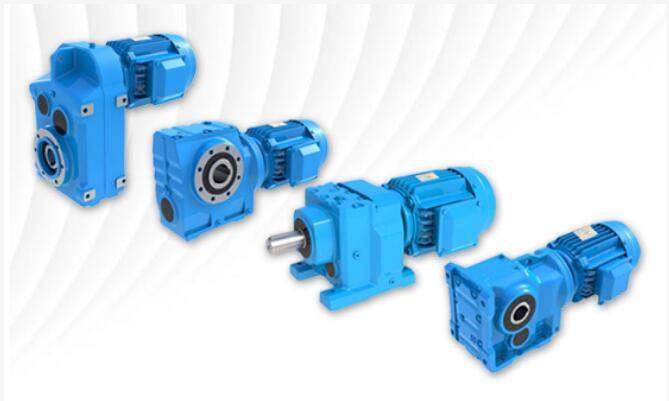
Một trong những vấn đề đầu tiên về định cỡ phát sinh từ việc định cỡ động cơ so với định cỡ tải. Việc xác định kích thước cho động cơ có thể đơn giản hơn và giúp hộp số hoạt động nhưng sẽ dẫn đến việc mua hộp số lớn hơn mức cần thiết. Hộp số này cũng sẽ đủ tiêu chuẩn cho ứng dụng. Tuy nhiên, việc định cỡ theo tải sẽ đảm bảo hộp số phù hợp với ứng dụng và tiết kiệm chi phí hơn cũng như có khả năng chiếm diện tích nhỏ hơn.
Common Aspects of Sizing Applications
Có một số khía cạnh về kích thước hộp số áp dụng cho mọi tình huống. Phần này sẽ nêu chi tiết các tiêu chí đó và cung cấp cái nhìn sâu sắc.
1. Yếu tố dịch vụ
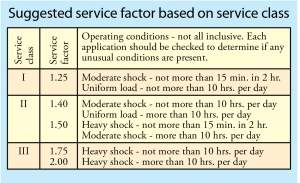 Before sizing an application, the customer should determine the service factor.
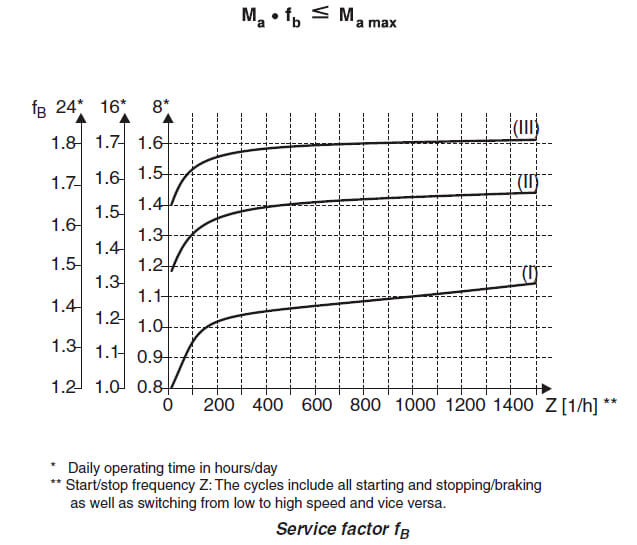
Service factor can be generally defined as an application’s required value over the rated value of the unit. Service factor should be determined for conditions such as non-uniform load, hours of service, and elevated ambient temperature.
How would one interpret a service factor? A service factor of 1.0 means a unit has just enough capacity to handle the application. There is no tolerance for additional requirements, which could cause the gearbox to overheat or fail. For most industrial applications, a service factor of 1.4 is adequate. This service factor signifies that the gearbox can handle 1.4 times the application requirement. If the application requires 1,000 inch-pounds, the gearbox would be sized to handle 1,400 inch-pounds. Different factors will affect how much service factor should be used in a given application.
2. Nhiệt độ và môi trường xung quanh
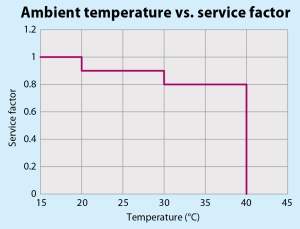
Higher ambient temperatures increase internal pressure, which will require an increase to the service factor used. High or low temperatures can require different seal materials and lubrication viscosities. The environment the gearbox will operate in is also an important consideration for sizing. Harsh environments can increase wear on the unit. Dusty or dirty environments often require special material to prevent corrosion or bacteria growth. Food or beverage plants require specific FDA compliant coatings and oil. Vacuum environments will require special grease and heat dissipation considerations, since there will be no air for cooling. Failure to account for these environmental features can result in a gearbox that cannot support the application properly. All of these aspects must be considered when sizing a gearbox.
3. Tải sốc hoặc loại tải
Tải trọng sốc hoặc va đập cao có thể làm tăng độ mài mòn trên răng bánh răng và ổ trục. Sự mài mòn này có thể gây ra hư hỏng sớm nếu không được tính đến khi định cỡ. Những tải này sẽ yêu cầu hệ số dịch vụ tăng lên. Tải đồng đều là tải không đổi trong quá trình ứng dụng, trong khi tải không đồng đều thay đổi trong quá trình ứng dụng. Tải không đồng đều, ngay cả khi nhỏ, sẽ yêu cầu hệ số phục vụ cao hơn tải đồng đều. Một ví dụ về tải trọng đồng đều là một băng tải có lượng sản phẩm nhất quán di chuyển trên đó. Tải không đồng đều sẽ là bất kỳ loại ứng dụng cắt gián đoạn nào. Lực cắt không liên tục này gây ra sự gia tăng định kỳ mô men xoắn lên hộp số, tạo thành tải trọng không đồng đều.
4. Kiểu hoặc Cơ chế đầu ra
Các cơ cấu đầu ra bao gồm bánh xích, ròng rọc hoặc bánh răng cưa, v.v. Các cấu hình đầu ra khác nhau, chẳng hạn như trục đầu ra kép hoặc ống lót gắn trên trục, sẽ làm giảm mức tải quá mức mà thiết bị được định mức. Các cơ chế đầu ra khác nhau sẽ thêm các tải trọng trục khác nhau cần được xem xét. Hầu hết các cơ cấu sẽ gây ra tải trọng hướng tâm cao, nhưng những thứ như bánh răng xoắn cũng có thể gây ra tải trọng trục. Những đầu ra này có thể yêu cầu các ổ trục khác nhau để chịu tải trọng hướng tâm hoặc hướng trục tăng lên.
5. Kích thước trục đầu ra hoặc lỗ khoan rỗng
When sizing an application, the output shaft and bore size must meet customer requirements. These could include a stainless output on the unit, and whether it has a keyed or keyless shaft, a keyed or keyless hollow bore, or a flanged output combined with any of the previous. Getting the correct bore size on a unit may force the customer to purchase a larger gearbox or a different style of gearbox to fit their current shaft. In some instances, the customer can modify their shaft to use the most cost-effective unit while providing an optimal solution.
6. Phong cách nhà ở
It is also important when selecting a gearbox to consider how it will mount. A unit could have mounting feet, a flange on the output, or just basic tapped holes on one or more sides. These housing styles could limit how a unit is mounted so having a variety of options could prevent custom frames or brackets from being needed. For example, having tapped holes on the bottom face of the unit would prevent the need for a special L-bracket to mount around the output.
Power Transmission
Some elements that affect the sizing process are industry specific. For the power transmission industry, output RPM, motor horsepower and frame size, and overhung load all impact the application calculations.
• RPM đầu ra The customer must determine the ratio needed for the gearbox reducer to operate, or provide input/output speed and operating hertz (Hz) for calculations. The standard is a 1750 input RPM at 60 Hz. Any changes will need to be specified when sizing as it will change the ratio calculation. Failure to account for changes will result in a gearbox that does not match the customer’s requirement.
• Motor HP and Frame Size The gearbox reducer size and input option must be determined before calculating the service factor. Once the gearbox is sized, use the required HP to compute the actual service factor. Large HP motors generate heat that can adversely affect the reducer’s mechanical ratings. This reduced rating, based on the increased heat, is known as the Thermal Capacity of a reducer, and must be considered when using large motors.
• General Shaft Load Kích thước phải xác minh rằng tải sẽ không làm hỏng hộp số. Lực, được đo bằng pound, mà trục đầu ra có khả năng duy trì được gọi là mức Tải quá tải. Nếu xếp hạng thấp hơn ứng dụng, bộ giảm tốc sẽ bị hỏng.
Motion Control
Đối với ngành công nghiệp servo, tốc độ đầu vào, quán tính, chuyển động mômen động, tải trọng trục cụ thể và đường kính trục động cơ ảnh hưởng đến quá trình định cỡ.
• Input Speed Input speed should not exceed the gearbox ratings or premature seal wear will occur due to increased pressure. Input speed can be accidently increased if there is an output mechanism with a ratio that is not considered when sizing, which is another reason why specifying any output mechanisms is so important.
• Inertia An inertia mismatch of less than 10:1 is desired for fine controlling of the output. This is important to obtain the high accuracy needed for some applications. Reducer size and ratio are main influences from the gearbox on inertia. Control engineers may request smaller mismatches or even specific amounts. Often a motor is chosen for its dynamic capabilities, not for its torque. It is common to use a motor with much more torque than needed for the application due to its increased rotor inertia. Some motor manufacturers even make motors specifically for high or low inertia ratings. This allows for better tuning of the application because of a lower inertia mismatch. When doing this, it is important to limit the output torque in the motor to prevent breaking the gearbox
• Dynamic Motion Cyclic motion may require using a higher service factor than continuous motion. This is because constant starts and stops cause additional wear on the gear teeth and seals. Cyclic reversing, which is constant back and forth motion between two points, requires an even higher service factor than cyclic or continuous
• Specific Shaft Loads Tải trọng xuyên tâm, trục và mô men phải được kiểm tra theo xếp hạng của thiết bị. Nếu không thực hiện việc này có thể dẫn đến gãy trục hoặc hư hỏng vòng bi hoặc răng bánh răng. Nói chung, hệ số dịch vụ tương tự được áp dụng cho các xếp hạng này để xác định hộp số mạnh phù hợp. Các loại vòng bi bổ sung có thể tăng xếp hạng này nếu ứng dụng cần chúng.
• Motor Shaft Diameter or Length Trục động cơ phải vừa với thiết bị và trục phải đủ dài để khớp hoàn toàn với khớp nối. Nếu không có sự tham gia đầy đủ, hiện tượng trượt đầu vào có thể xảy ra. Mặc dù điều này sẽ không ảnh hưởng đến hệ số dịch vụ cần thiết nhưng điều quan trọng là phải xem xét để tránh các vấn đề khi lắp động cơ. Một số nhà sản xuất có thiết kế đầu vào lớn cho phép bộ giảm tốc phù hợp với động cơ lớn hơn mà không cần tăng kích thước đơn vị.
Conclusion
To achieve the best gearbox reducer solution, customers should size from the load. This will ensure they receive cost effective solution that fits the application. The service factor, environment, ambient temperatures, shock load, output style, and hours of service are all important aspects for sizing. The more information the customer provides, the more accurate the sizing process. This will ultimately yield a solution that matches the customer’s requirements! There are numerous sizing programs available that can help determine what gearbox is most appropriate for your application.