
Basic Selection of Gearbox Reducer
Gearbox reducer selection can be quite difficult. Customers have a variety of gearbox reducers to choose from that are capable of fulfilling diverse requirements. A wrong decision could result in the purchase of a more expensive gearbox. The power transmission industry may need a gearbox that will support overhung loads while the motion control or servo industry may need a gearbox that will handle dynamic motion.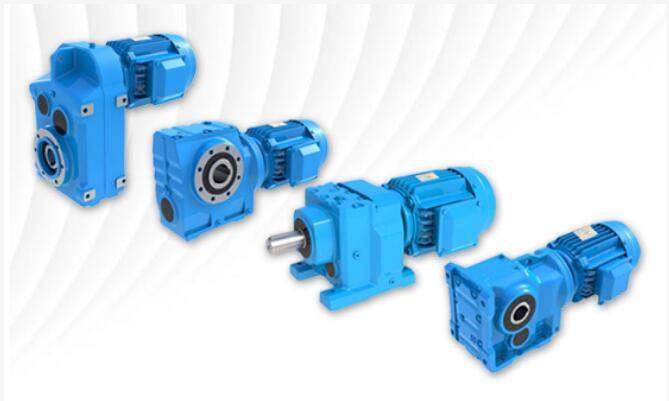
E 'ngoe ea mathata a pele a ho etsa boholo e hlaha ho tloha ho saese ho ea ho enjene khahlano le boholo ho isa moroalo. Ho etsa boholo ba enjene ho ka ba bonolo haholoanyane 'me ha fella ka lebokose la gear le sebetsang, empa ho tla etsa hore ho rekoe lebokose le leholoanyane ho feta kamoo ho hlokahalang. Lebokose lena la gear le lona le tla tšoaneleha bakeng sa kopo. Leha ho le joalo, ho lekanya boima ho tla etsa bonnete ba hore lebokose la gear le lekana ts'ebeliso 'me le boloka chelete e ngata le sebaka se senyenyane sa maoto.
Common Aspects of Sizing Applications
Ho na le likarolo tse 'maloa tsa boholo ba li-gearbox tse sebetsang maemong ohle. Karolo ena e tla qaqisa litekanyetso tseo le ho fana ka temohisiso.
1. Ntlha ea Tšebeletso
 Before sizing an application, the customer should determine the service factor.
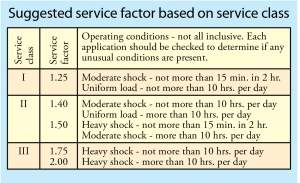
Service factor can be generally defined as an application’s required value over the rated value of the unit. Service factor should be determined for conditions such as non-uniform load, hours of service, and elevated ambient temperature.
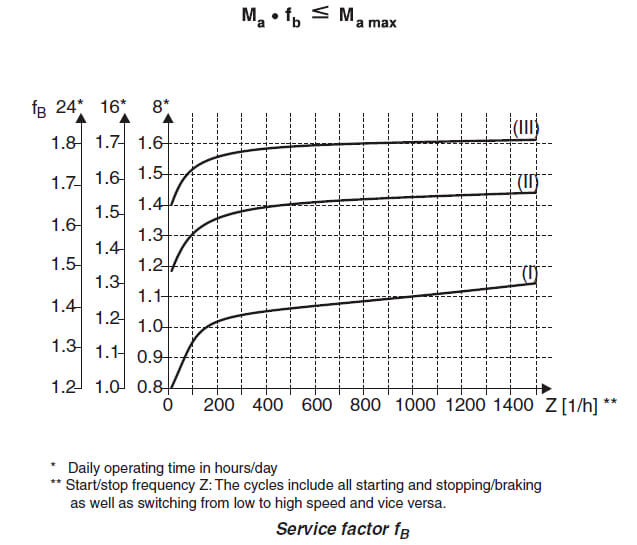
How would one interpret a service factor? A service factor of 1.0 means a unit has just enough capacity to handle the application. There is no tolerance for additional requirements, which could cause the gearbox to overheat or fail. For most industrial applications, a service factor of 1.4 is adequate. This service factor signifies that the gearbox can handle 1.4 times the application requirement. If the application requires 1,000 inch-pounds, the gearbox would be sized to handle 1,400 inch-pounds. Different factors will affect how much service factor should be used in a given application.
2. Boemo ba Mocheso le Tikoloho
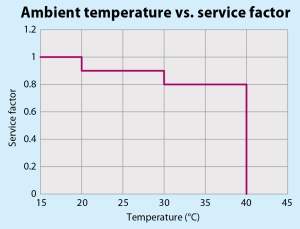
Higher ambient temperatures increase internal pressure, which will require an increase to the service factor used. High or low temperatures can require different seal materials and lubrication viscosities. The environment the gearbox will operate in is also an important consideration for sizing. Harsh environments can increase wear on the unit. Dusty or dirty environments often require special material to prevent corrosion or bacteria growth. Food or beverage plants require specific FDA compliant coatings and oil. Vacuum environments will require special grease and heat dissipation considerations, since there will be no air for cooling. Failure to account for these environmental features can result in a gearbox that cannot support the application properly. All of these aspects must be considered when sizing a gearbox.
3. Moroalo oa Shock kapa Mofuta oa Mojaro
Ho tsieleha ho hoholo kapa meroalo e nang le tšusumetso e ka baka ho senyeha ho eketsehileng ho meno a gear le li-shaft bearings. Seaparo sena se ka baka ho hloleha pele ho nako haeba se sa baloe ha ho etsoa boholo. Meroalo ena e tla hloka ho eketseha ha maemo a tšebeletso. Meroalo e ts'oanang ke meroalo e lulang e sa fetohe nakong ea kopo, athe meroalo e sa lekanang e fetoha nakong ea kopo. Meroalo e se nang junifomo, leha e le nyane, e tla hloka ts'ebeletso e phahameng ho feta mejaro e ts'oanang. Mohlala oa mojaro oa junifomo e ka ba conveyor e nang le palo e tsitsitseng ea sehlahisoa e palame ho eona. Mojaro o se nang junifomo e ka ba mofuta ofe kapa ofe oa ts'ebeliso ea nakoana ea ho itšeha. Matla ana a nakoana a ho itšeha a baka ho eketseha ha torque nako le nako ka lebokoseng la gear, e leng mojaro o sa tšoaneng.
4. Sebopeho sa Output kapa Mechanism
Mekhoa ea tlhahiso e kenyelletsa sprocket, pulley, kapa toothed pinion, ho bolela tse 'maloa. Litlhophiso tse fapaneng tsa tlhahiso, joalo ka shaft e tsoang habeli kapa shaft mounted bushing, li tla fokotsa hore na yuniti e lekantsoe bokae. Mekhoa e fapaneng ea tlhahiso e eketsa meroalo e fapaneng ea shaft e lokelang ho nahanoa. Mekhoa e mengata e tla baka mojaro o phahameng oa radial, empa lintho tse kang helical gearing le tsona li ka baka mojaro oa axial. Liphetho tsena li ka hloka li-bearings tse fapaneng ho ikarabella bakeng sa ho eketseha ha radial kapa axial load.
5. Output Shaft kapa Hollow Bore Size
When sizing an application, the output shaft and bore size must meet customer requirements. These could include a stainless output on the unit, and whether it has a keyed or keyless shaft, a keyed or keyless hollow bore, or a flanged output combined with any of the previous. Getting the correct bore size on a unit may force the customer to purchase a larger gearbox or a different style of gearbox to fit their current shaft. In some instances, the customer can modify their shaft to use the most cost-effective unit while providing an optimal solution.
6. Mekhoa ea Matlo
It is also important when selecting a gearbox to consider how it will mount. A unit could have mounting feet, a flange on the output, or just basic tapped holes on one or more sides. These housing styles could limit how a unit is mounted so having a variety of options could prevent custom frames or brackets from being needed. For example, having tapped holes on the bottom face of the unit would prevent the need for a special L-bracket to mount around the output.
Power Transmission
Some elements that affect the sizing process are industry specific. For the power transmission industry, output RPM, motor horsepower and frame size, and overhung load all impact the application calculations.
• Sephetho sa RPM The customer must determine the ratio needed for the gearbox reducer to operate, or provide input/output speed and operating hertz (Hz) for calculations. The standard is a 1750 input RPM at 60 Hz. Any changes will need to be specified when sizing as it will change the ratio calculation. Failure to account for changes will result in a gearbox that does not match the customer’s requirement.
• Motor HP and Frame Size The gearbox reducer size and input option must be determined before calculating the service factor. Once the gearbox is sized, use the required HP to compute the actual service factor. Large HP motors generate heat that can adversely affect the reducer’s mechanical ratings. This reduced rating, based on the increased heat, is known as the Thermal Capacity of a reducer, and must be considered when using large motors.
• General Shaft Load Sekhahla se tlameha ho netefatsa hore mojaro o ke ke oa senya gearbox. Matla, a lekantsoeng ka liponto, ao shaft e khonang ho e boloka a tsejoa e le tekanyo ea Overhung Load. Haeba tekanyetso e le tlase ho ts'ebeliso, se fokotsa lebelo se tla senyeha.
Motion Control
For the servo industry, input speed, inertia, dynamic torque motion, specific shaft loads, and motor shaft diameter affect the sizing process.
• Input Speed Input speed should not exceed the gearbox ratings or premature seal wear will occur due to increased pressure. Input speed can be accidently increased if there is an output mechanism with a ratio that is not considered when sizing, which is another reason why specifying any output mechanisms is so important.
• Inertia An inertia mismatch of less than 10:1 is desired for fine controlling of the output. This is important to obtain the high accuracy needed for some applications. Reducer size and ratio are main influences from the gearbox on inertia. Control engineers may request smaller mismatches or even specific amounts. Often a motor is chosen for its dynamic capabilities, not for its torque. It is common to use a motor with much more torque than needed for the application due to its increased rotor inertia. Some motor manufacturers even make motors specifically for high or low inertia ratings. This allows for better tuning of the application because of a lower inertia mismatch. When doing this, it is important to limit the output torque in the motor to prevent breaking the gearbox
• Dynamic Motion Cyclic motion may require using a higher service factor than continuous motion. This is because constant starts and stops cause additional wear on the gear teeth and seals. Cyclic reversing, which is constant back and forth motion between two points, requires an even higher service factor than cyclic or continuous
• Specific Shaft Loads Meroalo ea li-radial, axial le shaft ea motsotsoana e tlameha ho hlahlojoa khahlano le litekanyetso tsa yuniti. Ho hloleha ho etsa sena ho ka baka ho robeha ha shaft kapa ho senyeha ha li-bearings kapa meno a gear. Ka kakaretso, ntlha e tšoanang ea ts'ebeletso e sebelisoa litekanyetsong tsena ho fumana hore na lebokose la gear le matla ka nepo. Mefuta e meng ea ho jara e ka eketsa lintlha tsena haeba ts'ebeliso e li hloka.
• Motor Shaft Diameter or Length The shaft motor e tlameha ho lekana yuniti, 'me shaft e lokela ho ba bolelele bo lekaneng bakeng sa ho kopanya ka botlalo. Ntle le ho kenella ka botlalo, ho thella ho ka etsahala. Le ha sena se ke ke sa ama karolo ea ts'ebeletso e hlokahalang, ho bohlokoa ho nahanoa e le ho qoba mathata a ho phahamisa koloi. Baetsi ba bang ba na le moralo o moholo oa ho kenya o lumellang mochini o fokotsang motlakase ho amohela enjene e kholo ntle le ho eketsa boholo ba yuniti.
Conclusion
To achieve the best gearbox reducer solution, customers should size from the load. This will ensure they receive cost effective solution that fits the application. The service factor, environment, ambient temperatures, shock load, output style, and hours of service are all important aspects for sizing. The more information the customer provides, the more accurate the sizing process. This will ultimately yield a solution that matches the customer’s requirements! There are numerous sizing programs available that can help determine what gearbox is most appropriate for your application.