
How to calculate the Rotate Speed of a Motor and Gear Speed Reducer?
Speed reducers are a very important part of mechanical power transmission systems. There are several different types available, each with certain features. Installing the wrong gear reducer into an application can be disastrous. The first step to choosing a gear reducer is to know what torque and speed are required as well as the most suitable motor to use. Next, if a gear reducer is needed, you select the proper type and ratio.
Dus wat is een snelheidsreductiemiddel? Meestal zijn de voordelen dat het de snelheid kan verlagen en het koppel kan verhogen. De hoeveelheid snelheidsreductie is afhankelijk van het type motor dat wordt gebruikt. Terwijl de ene motor bijvoorbeeld geen tandwielreductor nodig heeft om op lage snelheden te draaien (zo laag als ongeveer 1.000 tpm), heeft een andere motor er misschien wel een nodig om op elke snelheid te draaien.
How to do motor gear reduction calculation?
First of all, before calculating the speed ratio of the gear reducer, we must first understand the aspects related to the gear reducer. The first aspect is the speed of the gear reducer motor, that is, the rated speed, the gear reducer with different pole numbers. The motor speed is different. The conventional regulation is like this. The 4-pole gear motor speed is 1450 rpm output, the 2-pole gear motor speed is 2850 rpm output, and the 6-pole gear motor speed is 950 rpm. Output per minute, 8-pole motor speed is 750 rpm output.
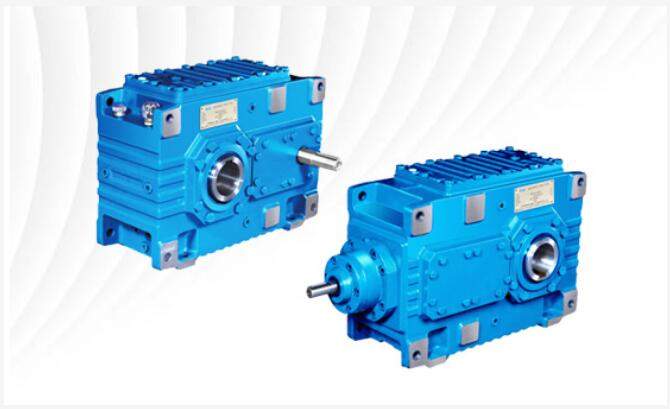
In the second aspect, any equipment that uses gear reducers and motors must have a transmission speed requirement after the equipment is in operation. How to do motor gear reduction calculation. Therefore, the speed ratio of the gear reducer is calculated. It is necessary to provide the transmission speed requirements of the designed equipment. For example, if you require your equipment to output an output speed of 10 revolutions per minute, then you can use the known conditions: the speed of the geared motor and the final output speed to calculate the speed ratio of the reducer. How to do motor gear reduction calculation. We can use the formula to calculate, the speed reducer ratio is equal to the speed of the geared motor divided by the final output speed. If a 4-pole geared motor is used as an example, the final output speed of the device is 10 rpm, then 1450/10=145, 145 is the required gear reducer ratio. Therefore, for those who do not know how to calculate the speed ratio of the gear reducer, you can calculate it in this way. However, the premise of calculating the speed ratio of the reducer is to know the motor speed and the final output speed of the designed equipment. If you are not sure what the final output speed of your design is, it is difficult to calculate the speed ratio of the gear reducer. . For example, in terms of numbers, X, Y, and Z are the same as the principle of unknown numbers. Three conditions must be known for two conditions before the third condition is calculated.
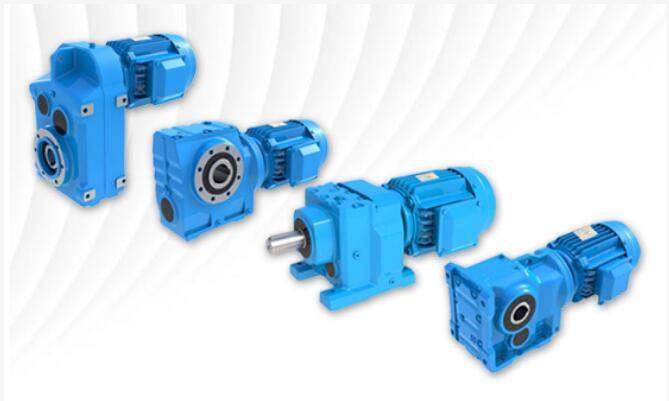
However, some people in the process of these situations, in fact, do not understand some of the specific ways, so now let us give you further explanation, how do we do a good job in gear reduction mechanical and electrical models, some specific ways What are the other things? There are some specific things that are tailored to the nature. Then, after you make the right choices, you can get the protection in the process of utilization.
How to do motor gear reduction calculation. In the process of making choices for gear reduction electro-mechanical models, we need to be sure of the speed of the machine. Based on the speed of this aspect, you can be sure of the reduction ratio in the entire utilization process, which is the most basic for our use. The difference is not the same for the overall reduction ratio request, can correctly understand these specific factors, look at some of their actual needs, so that you can combine the specific parameters, the equipment selection becomes a problem It is more accurate, and people must understand these practical aspects in the process of choice.
How to do motor gear reduction calculation. Among the various models, people make choices, must understand the specific parameters, there is a calculation of the load force distance among the parameters, which is the data we must pay attention to when choosing gear reduction electro-mechanical. Based on the data in this aspect, we also need to see some specific situations in the force process when we choose gear reduction electro-mechanical, and then affirm the overall electro-mechanical model, which will have some impact on the subsequent use. Therefore, everyone should have some understanding of the specific parameters.
After understanding the two aspects of gear reduction and electro-mechanical, we want to make a choice of models. We must pay attention to the overall additional functions, including power-off brakes, power-on, brakes, and frequency conversion. Different factors are a very important part for us all. When you can really do some relevant understanding and then make certain choices, then it will be more secure for the whole process, so you must make a good decision in this regard.
People can combine various factors with the choice of gear reduction electro-mechanical models, and consider their actual needs, so that they can be more secure in the process of selection. Anyone’s choice must be combined with any aspect of the actual factors, so that the results of your choices will be better, and will also ensure the next use.
Speed ratio = motor output revolutions ÷ reducer output revolutions (“speed ratio” is also called “gear ratio”)
1. Know the motor power and speed ratio and the use factor, and find the torque of the reducer as follows:
Reducer torque = 9550 × motor power ÷ motor power input revolution × speed ratio × use coefficient
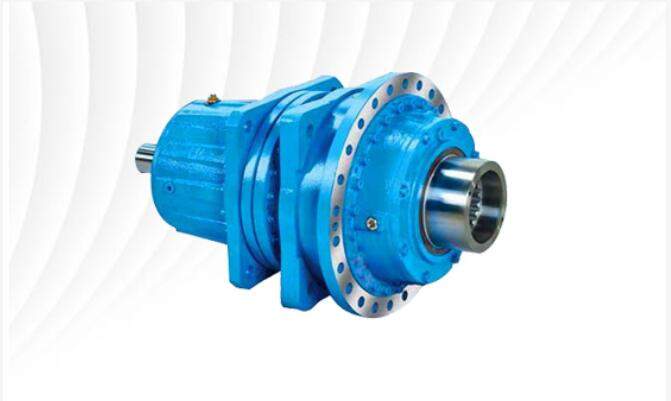
How to do motor gear reduction calculation
2. Know the torque and the output number of the reducer and the use factor. Find the motor power required for the reducer as follows:
Motor power = torque ÷ 9550 × motor power input speed idling ratio ÷ use coefficient
Motor torque calculation
The “torque” of the motor in N•m (Nm) is calculated as T=9549 * P / n.
P is the rated (output) power unit of the motor is kilowatt (KW)
The denominator is the rated speed n unit is the revolution per minute (r/min)
P and n can be found directly on the motor nameplate.
Set: The rated power of the motor is P (kw), the speed is n1 (r/min), the total gear ratio of the reducer is i, and the transmission efficiency is u.
Then: output torque = 9550 * P * u * i / n1 (N.m)
How to do motor gear reduction calculation
1. Define the calculation method: reduction ratio = input speed ÷ output speed.
2, the general calculation method: reduction ratio = use torque ÷ 9550 ÷ motor power motor power input rotation number ÷ use factor, MB stepless speed changer use precautions.
3. Calculation method of gear train: reduction ratio = number of driven gears ÷ number of driven gears (if multi-stage gear reduction, then the number of driven gears of all pairs of gears that mesh with each other ÷ the number of active gear teeth, and then the result will be Multiply, NRV reducer.
4, belt, chain and friction wheel reduction ratio calculation method: reduction ratio = driven wheel diameter ÷ drive wheel diameter, helical gear reducer, cycloidal pinwheel reducer how to add lubricant.
Motors run at a specific revolutions per minute (RPM) and a speed reducer is needed if you want to keep that motor, but have a lower RPM. Calculating the RPM resulting from a motor and speed reducer assembly requires only basic mathematical knowledge.
Om het voor uw toepassing vereiste toerental en overbrengingsverhouding te berekenen, moet u het gewenste uitgangstoerental en koppel kennen. Zodra u over deze twee stukjes informatie beschikt, kunt u de volgende formule gebruiken:
Uitgangssnelheid (RPM) = Ingangssnelheid (RPM) / Overbrengingsverhouding
Waar:
- Uitgangssnelheid (RPM) is de gewenste snelheid van de uitgaande as
- Ingangssnelheid (RPM) is de snelheid van de ingaande as, doorgaans bepaald door de motor
- Overbrengingsverhouding is de verhouding tussen het uitgaande toerental en het ingaande toerental van de versnellingsbak
Stel dat u een belasting heeft waarvoor een uitvoersnelheid van 100 tpm en een uitvoerkoppel van 100 lb-ft vereist zijn. Stel dat uw motor een ingangssnelheid van 1750 tpm en een ingangskoppel van 50 lb-ft levert. In dat geval kunt u de benodigde overbrengingsverhouding en uitgaand toerental als volgt berekenen:
Overbrengingsverhouding = Ingangskoppel / Uitgangskoppel Overbrengingsverhouding = 50 / 100 Overbrengingsverhouding = 0,5
Uitgangssnelheid (RPM) = Ingangssnelheid (RPM) / Overbrengingsverhouding Uitgangssnelheid (RPM) = 1750 / 0,5 Uitgangssnelheid (RPM) = 3500
Daarom is de vereiste overbrengingsverhouding 0,5 en de uitgangssnelheid 3500 tpm. Het is belangrijk op te merken dat deze berekeningen schattingen geven en kunnen variëren op basis van factoren zoals motorefficiëntie en gebruiksomgeving. Het wordt altijd aanbevolen om een motorreductorexpert te raadplegen bij het selecteren van de juiste motorreductor voor uw toepassing.